Why creators are the future of marketing

Since the 1930’s when newspapers and radio commanded the majority of advertising dollars, wherever those eyeballs may be. We have now entered the era where creators, for multiple reasons, are set to capture a rapidly growing portion of media budget.
Below outlines how we got here, and why the next few years will create a windfall for brands who can capitalize on the underlying trends at play, as well as those creators who truly enable demand gen.
A Brief History of Attention
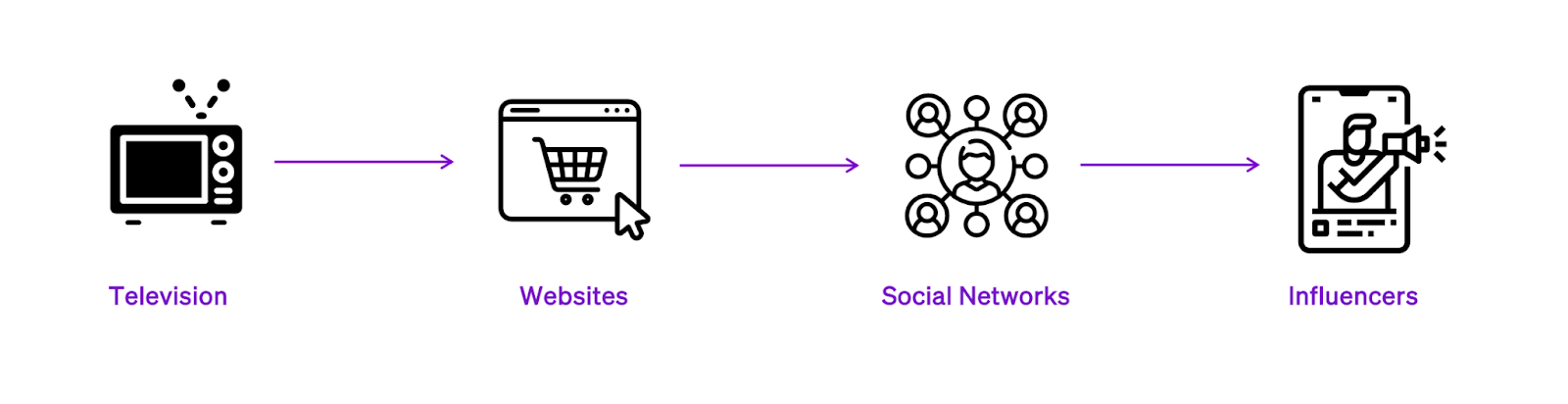
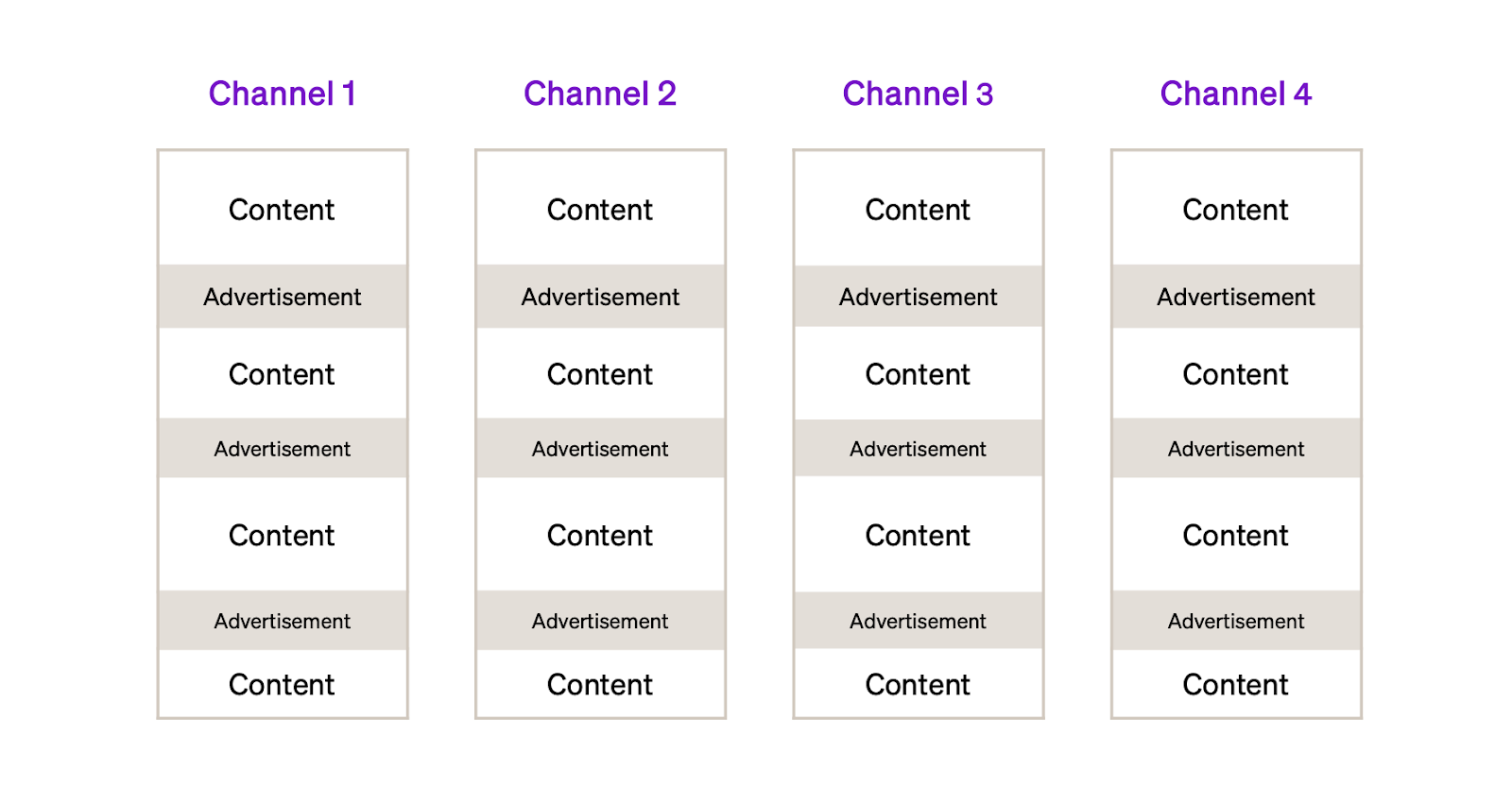
Phase 1 - 1950-2000 - the era of creating and distributing content
This time period was dominated by Radio and TV broadcasters that would create interesting content and place advertisements around in the form of commercials.
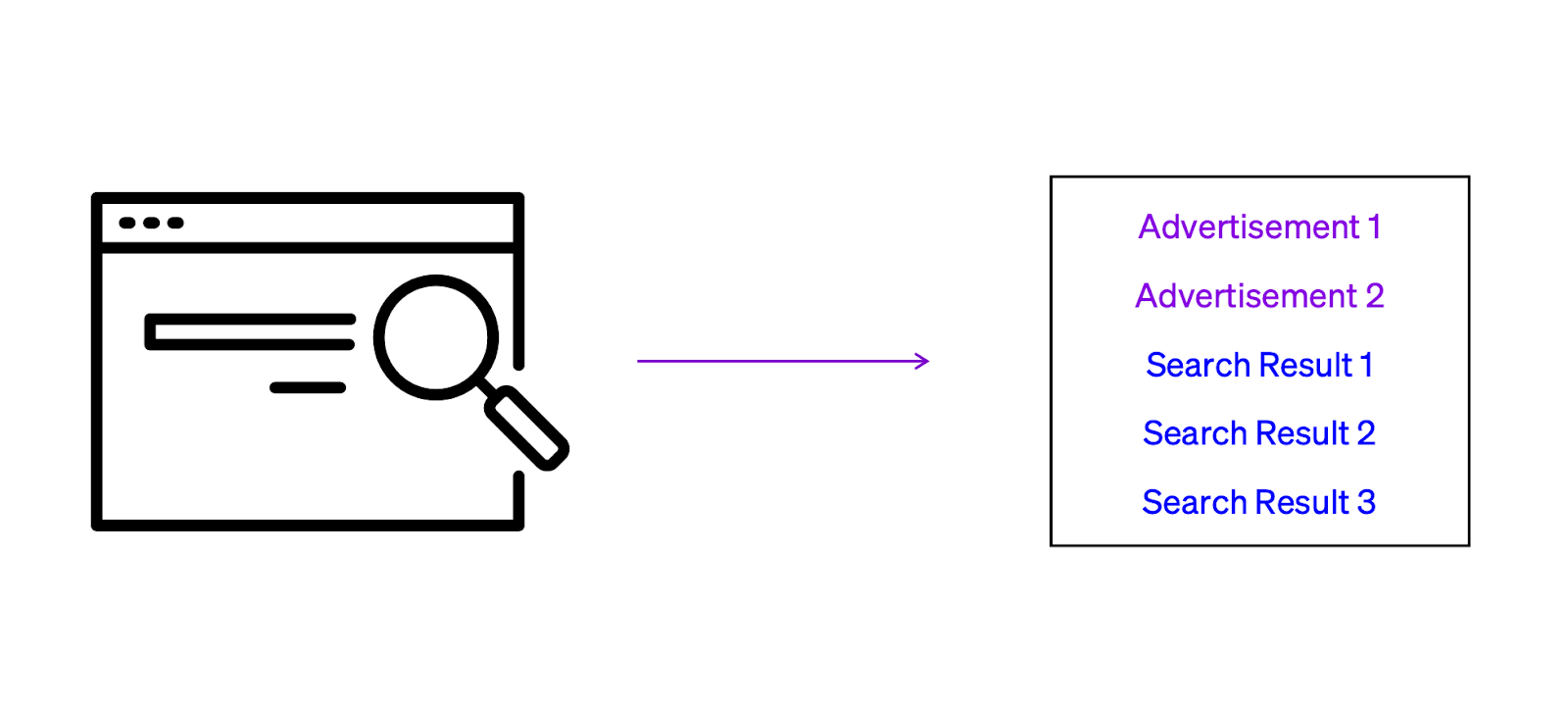
Phase 2 - 2000-2010 - the internet era
As the internet started rolling out to mainstream America in the early 2000’s this created an incredible opportunity for new ad platforms to arise. By 2007, when 80% of US consumers were actively online, Google had emerged as the pre-eminent platform consumers would use to navigate the internet. In doing so, Google could command a high portion of advertising dollars given they had a much better knowledge of consumer intent than historic platforms, and thus more effectively influence outcomes.
Phase 3 - 2010-2020 - the social network era
Whilst the search players had now very effectively monetized indexing information, social media platforms such as The Facebook showed up and started to now organize people. People were now no longer geographically constrained from networking, and could stay in touch with friends across the planet on these newly emerging social platforms.
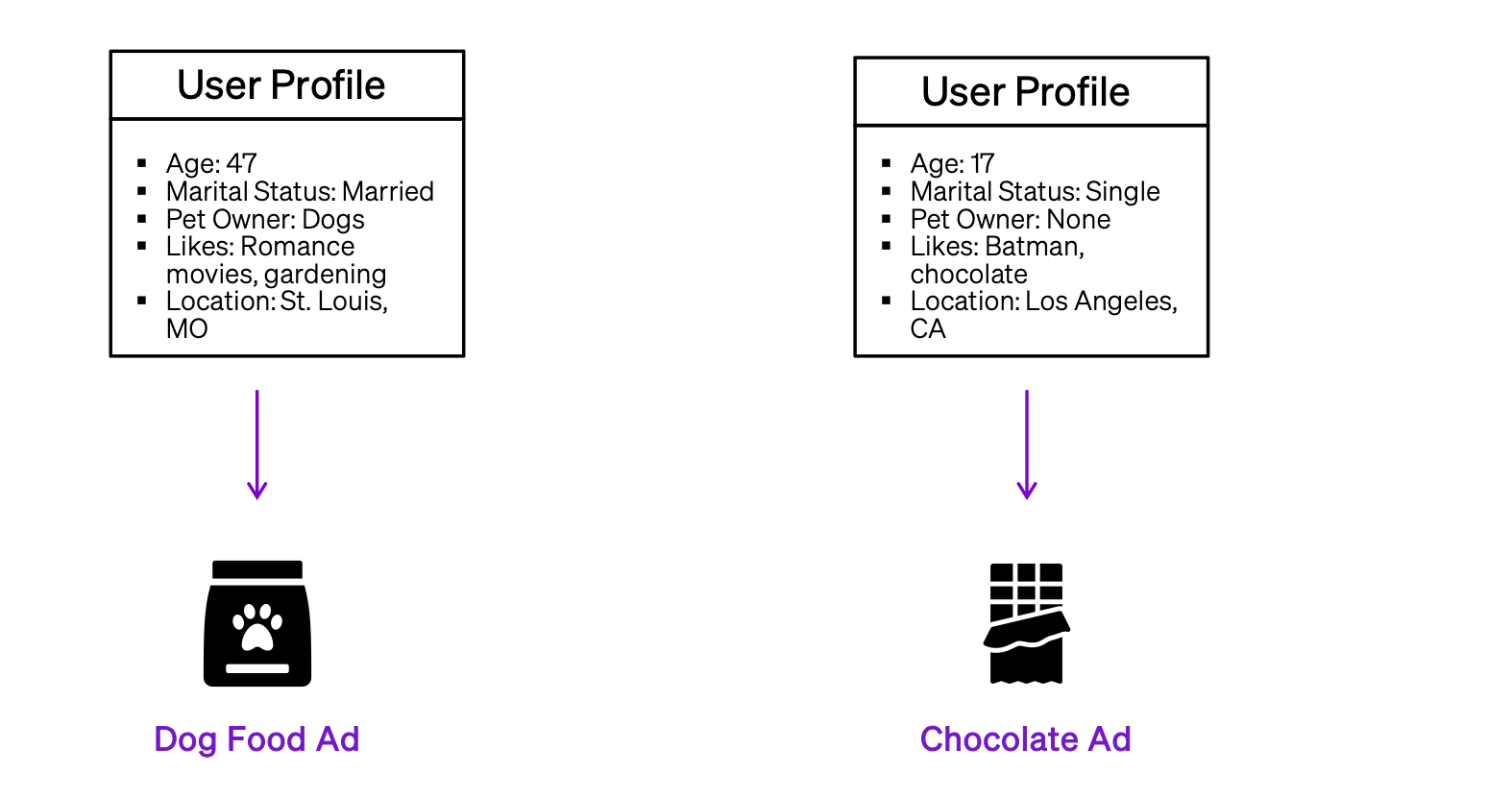
As consumers created profiles the platforms developed a detailed understanding of consumer interests, making placing ads hyper-focused. By 2017, Facebook now controlled ~20% of global online ad spend.
Now, We Have Entered The Creator Era
Phase 4 - 2025+ - the era of creators
As platforms have existed over time, millions of individuals have now built up engaged, loyal followings on top of these platforms. In many cases, the individuals have become far bigger than the teams they represent, or the shows they star in. With this, these creators who have created differentiated, focused content have now aggregated very large, typically like-minded audiences. This makes them perfectly primed to unlock the next wave of demand gen 2.0.
On KOMI alone we see the power certain category-leading creators have developed. These creators are now incredibly well positioned to sell products to their audience, in those specific categories, over any other traditional platform. Certain examples include:
- @Nick DiGiovanni is renowned for his invention and content surrounding all things food
- @Olivia Ponton has established a loyal following for her sense of fashion
- @Sophie Habboo legion of fans obsess over her honest podcast personality and beauty recommendations
But, Why Are Creators Uniquely Positioned To Win?
Creators Now Command Consumer Attention and Trust
Years of trust, affinity, and community-building have shifted consumer trust decisively toward creators. 83% of consumers trust creators more than traditional advertisers. As opposed to believing a static ad, millennials are searching for UGC and written reviews from fellow customers, but also from voices of authority from within that space as to whether they should buy a product or not.
68% of gen-z are using social media to find products to buy. Where everyone used to navigate to Google, Yahoo and Bing, future generations are searching for products in a completely different way. Discover feeds and influencer recommendations are now critical to driving consumer action. Consumers are also searching Instagram and TikTok for real customer review videos as a second-step of this new purchasing journey. For brands, cultivating an engaged community that talks positively about you is no longer optional—it’s essential.
Legacy Digital Ad Channels Have Become Less Effective
Whilst the ability of creators to command consumer attention and loyalty is a major driving force for brands to scale up budgets in creator marketing, two other converging trends are also providing strong tailwinds for creators:
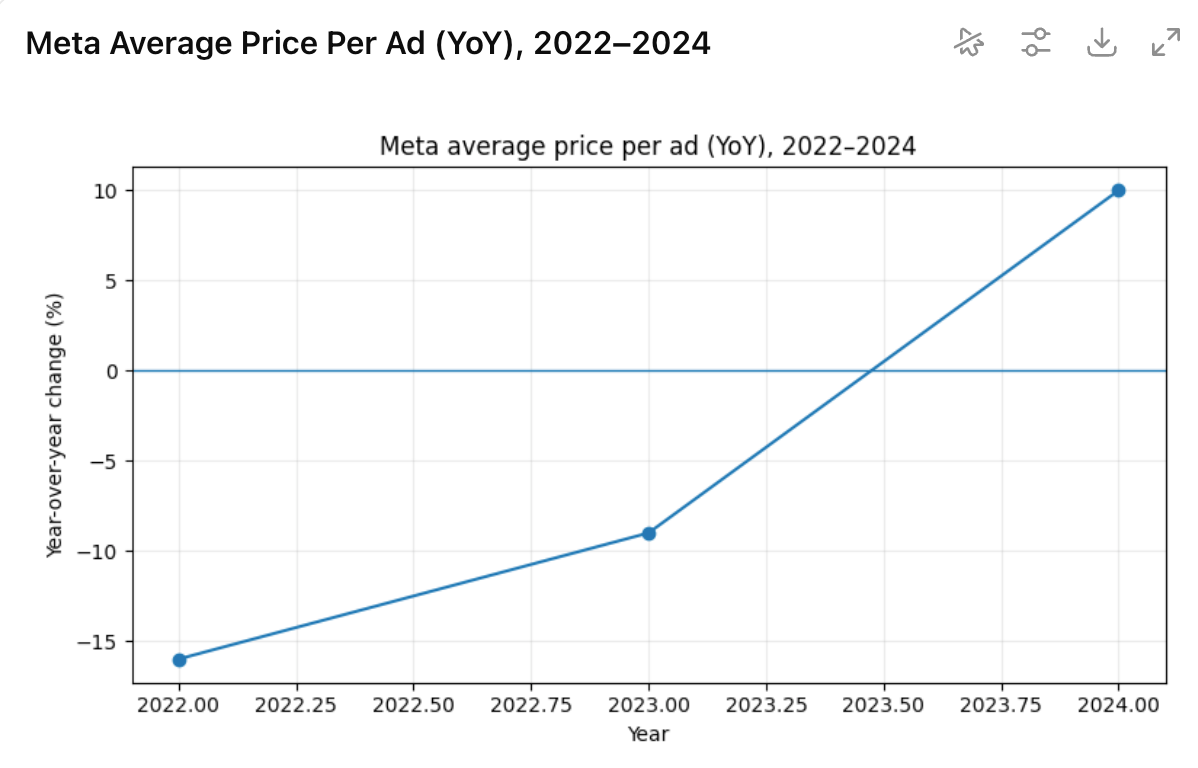
- Increased volume of brand competition: Setting up a brand has become easier than ever, with near zero barriers to entry. Kudos to Shopify. With this, millions of companies have entered the market and all are relying on Google and Meta to be their ‘secret’ weapon to scale. The sheer volume of demand for consumer eyeballs has naturally caused customer acquisition costs to increase over time. The supply and demand curve is out of whack.
Source: Meta
- Regulatory / Technological
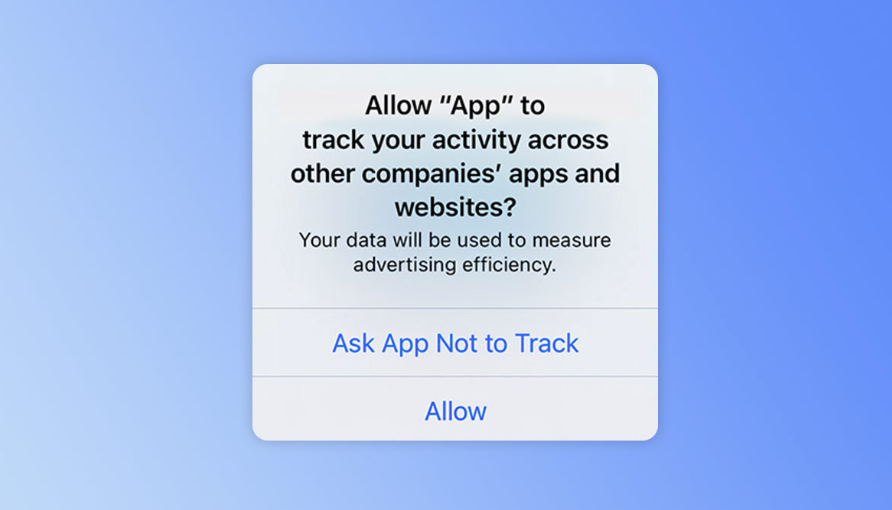
Existing platforms have faced multiple issues as consumers now have more power on their ability to be tracked. As consumers have become more data protective, and our reddit feeds have become awash with hacks to ‘opt out’ and ‘protect yourself’, platforms have become less efficient with their targeting algos, causing brands to face higher costs of customer acquisition.
Whilst It’s Inevitable, It Is Not Yet Easy For Brands, Or Creators
History has proven that for an ad channel to gain mass adoption, it has to be accessible, easy to use, and scalable. Until today, creator marketing has been quite the opposite.
In order to access this exciting, high-converting ad channel, brands have been forced to expend a vast amount of time in order to generate meaningful financial rewards. To ‘play’, brands are basically faced with two options:
- Try to find a strong, but also cost-effective influencer agency who gets your brand and has thousands of contacts in that specific vertical, or
- Invest in recruiting, onboarding and arming an in-house team with all the costly tools they need
Whichever option brands choose, unfortunately only 20% of the time is still spent doing the really value-add aspects of setting a strategy, creating a brief and reviewing content to ensure that it will feel authentic and engage consumers. Instead, 80% of the time is being spent on admin such as sending 300 copy and paste emails, chasing managers, contracting, invoicing, etc.
This problem is made worse by the fact that ROI has proven to be highest when activating an army of micro and nano influencers who can better drive conversion - but this requires even more administrative overhead. More on that in a future article.
An Easy, Scalable Future Is Coming
For brands, executing a creator campaign should be as easy and scalable as running Meta ads. Brands at all levels deserve access to the world's most authentic storytellers with the measurement and efficiency of programmatic advertising. In a world where AI is commoditizing content, social promotion from established creators will become increasingly important for driving revenue and credibility with consumers.
After supporting multiple global brands to execute influencer marketing, we realized this wasn’t yet possible. However, we also realized that KOMI was incredibly well positioned, with the right ingredients, to solve this problem:
- Access to hundreds of thousands of creators (soon to be millions)
- Access to unique data on creator audiences, engagement levels and commerce conversion
- Brand deals, campaigns and performance history
With these ingredients, combined with our sophisticated AI technology, KOMI is now aiming to solve this problem for brands - and ad agencies - of all sizes. By making creator marketing accessible, easy to use and scalable, this will also create $100B of income for creators around the world, no matter how well connected they are. Based on data and simulating forecasts, we will find and contract the best influencers on the planet for each brand. There will always be a place for gut feel, but we are moving influencer marketing from vibes-based to data-based.
-
Lewis is CEO and founder of KOMI. If you're a brand looking to scale creator marketing, a creator seeking sustainable partnerships, or an investor interested in the future of advertising infrastructure, reach out.
MORE FROM THE FEED


UNLEASH THE POWER OF CREATOR